
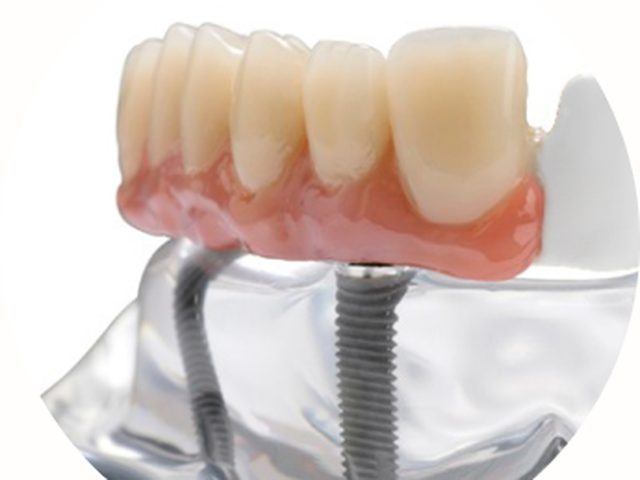

Implants with little bone, in Chamberí
"You have no bone" stopped being a final answer years ago.
What having no bone actually means
When a tooth is lost, the bone that held its root stops receiving load and resorbs. The process is fastest in the first months and carries on for years, so an old gap nearly always has less volume than it once did.
What can be rebuilt
Grafts, membranes and growth factors recover enough volume in most cases. At the back of the upper jaw, a sinus lift additionally gains height where an implant used to be ruled out on the spot.
How much bone is available is only known from a CT scan. A verdict given years ago may well be out of date.
-
Cases other clinics rule out
Severe bone loss has a solution with the right technique and planning.
-
Decided on the 3D scan
We measure the bone actually available before proposing any technique.
-
Without giving up aesthetics
Bone reconstruction also shapes the final aesthetic result, and is planned with it in mind.
At this clinic
Cases with little bone at Fortuny
We regularly see patients who were told long ago that an implant was out of the question. Reviewing the case on a current CT changes the prognosis for a good number of them.
The regeneration is planned digitally alongside the final implant position, so no bone is rebuilt where it will not be needed.
- A current CT before writing any case off.
- Regeneration planned with the final implant position.
How we approach a case with little bone
-
Volumetric diagnosis
CBCT and measurement of the bone available at each position. This is where we decide whether to regenerate, lift or change the anchorage.
-
Planning the technique
The procedure is chosen and the outcome simulated digitally, including the final position of the prosthesis.
-
Surgery and follow-up
Guided surgery and more frequent post-operative checks than usual, because regeneration needs monitoring.
Who carries it out
The team performing implants with bone loss in Madrid
-

Eduardo Crooke
Cirujano implantólogo
-

Francis Coachman
Dentista Asociado · Implantólogo
-
Sergio Toledano Gil
Dentista asociado · Implantólogo
Registration no. 28014764
Common questions
Frequently asked questions about this treatment
01 What happens if I do not have enough bone for implants?
It is either regenerated or an alternative anchorage is found. Guided bone regeneration, sinus lift, grafting or zygomatic implants anchored in the cheekbone: the technique is chosen by measuring the bone actually available on the 3D study.
02 Another clinic told me I am not a candidate. Is a second opinion worth it?
Yes. It is the most common reason for consultation in this area. Many cases were ruled out because they required a technique that clinic does not perform, not because they had no solution.
03 What are zygomatic implants?
They are longer implants anchored in the cheekbone rather than the upper jaw. They make it possible to rehabilitate upper arches where hardly any bone is left, avoiding extensive grafting and shortening timescales.
04 Does bone regeneration make treatment much longer?
It depends on the defect. In some cases regeneration happens in the same surgical session as implant placement; in others a preliminary stage of several months is needed. You are told from the outset, in the treatment plan.
05 Is surgery with regeneration more painful?
Recovery usually involves more swelling than a straightforward implant, controllable with the prescribed medication. Using PRGF, obtained from the patient’s own blood, helps healing to be faster and more comfortable.
Other treatments you may be interested in

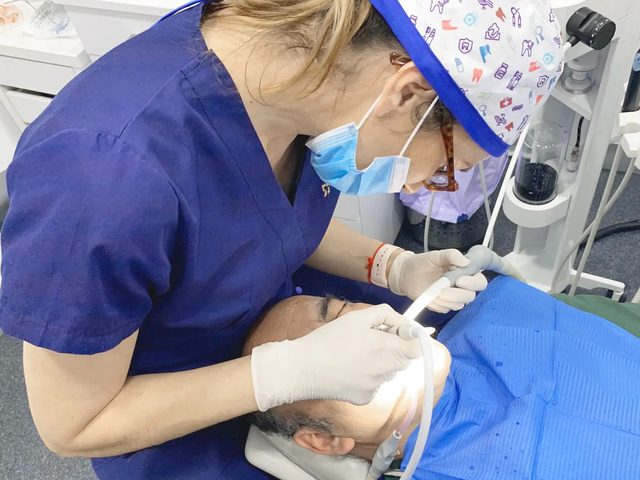
First assessment
Request your implants with bone loss assessment in Madrid
- We call you to understand your case before proposing anything.
- Diagnosis with digital planning and a fixed written quote.
- No obligation: if you do not need treatment, we will tell you.
Prefer to talk to us directly? 919 464 044 · WhatsApp