
Invisible braces in Chamberí
Correcting the position without it showing while you do it.
How clear aligners work
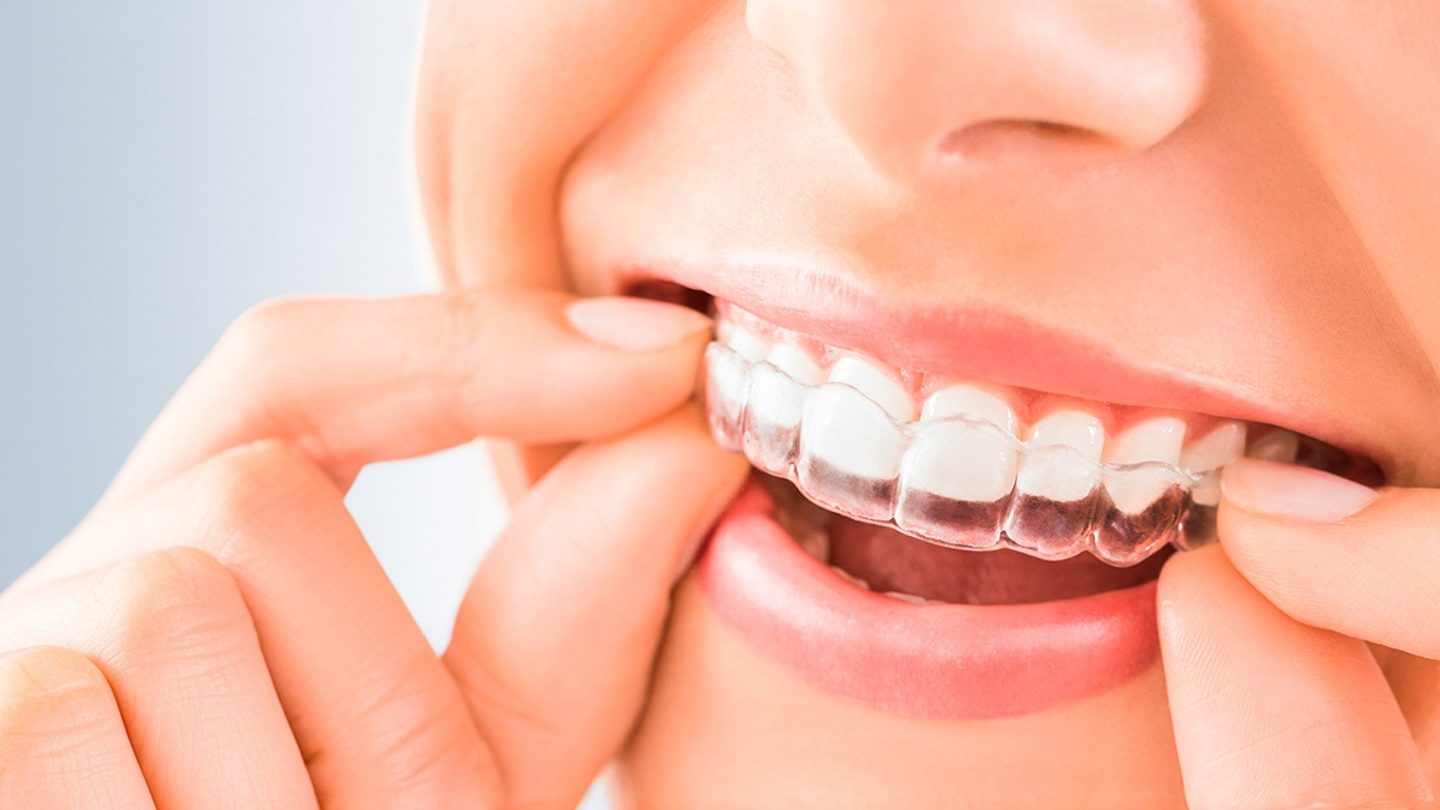
From an intraoral scan the whole path of every tooth is planned digitally and a sequence of transparent trays is manufactured. Each one moves the teeth a fraction of a millimetre, and the series as a whole completes the planned movement.
Why they suit an adult profile
They are removable and all but invisible, which avoids the cosmetic impact of brackets in professional life. They come out for eating and for cleaning, so there is no change of diet and no complicated brushing.
The part that depends on you
An aligner only works while it is in, and that means wearing it twenty to twenty-two hours a day. It is the factor that most determines whether treatment finishes on schedule, and the only one that is not in our hands.
Before any tooth is moved we check that the gums are healthy and there is no active decay.
-
Simulated result
You see the full path and the final position before starting.
-
Discreet
Clear and removable: your appearance does not change during treatment.
-
Easier hygiene
Removed for brushing, so the risk of caries and gingivitis is lower than with brackets.
At this clinic
Orthodontics at our Fortuny clinic
A good share of our orthodontic patients in Chamberí are adults who wore braces as teenagers and have relapsed for want of retention.
So we put retention on the table from day one as part of the treatment, not as something tacked on at the end.
- The whole movement planned digitally.
- Retention planned from the outset.
- Gums and decay checked beforehand.
Common questions
Frequently asked questions about this treatment
01 How many hours a day do I need to wear the aligners?
Around 22 hours a day. They come out to eat and to brush. It is the factor that most determines whether the planned timeline is met.
02 Will people notice them?
They are clear and fit closely to the tooth, so they go unnoticed in normal interaction. There may be a slight speech adjustment in the first few days.
03 Are clear aligners suitable for my case?
For most crowding, spacing and alignment corrections, yes. Severe skeletal malocclusions may need a different approach. That is determined by the initial study.
04 What happens when treatment finishes?
A retainer is fitted, fixed or removable. Without retention teeth tend to drift back: the retention phase is not optional.
Other treatments you may be interested in

First assessment
Request your invisible orthodontics assessment in Madrid
- We call you to understand your case before proposing anything.
- Diagnosis with digital planning and a fixed written quote.
- No obligation: if you do not need treatment, we will tell you.
Prefer to talk to us directly? 919 464 044 · WhatsApp